Profile: Myrrh Essential Oil
- Dale Parker

- Dec 14, 2023
- 1 min read
Updated: Jan 30, 2025
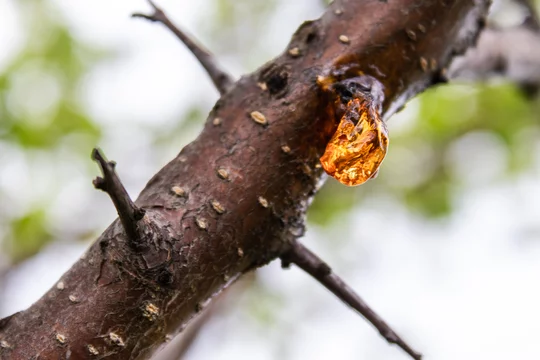
Myrrh (Commiphora myrrha) trees are native to northeast Africa, southwest Asia, particularly in the Red Sea regions of Somalia, Ethiopia, and Yemen. They are small trees with knotted branches, fragrant leaves and white flowers. The name comes from the Arabic and Hebrew word, "mur," meaning, "bitter." When cuts are made in its trunk, it exudes an oleo resin that hardens into reddish-brown drops.
The essential oil of myrrh is distilled from these hardened drops but yields only about 8% essential oil. This oil is high in sesquiterpenes which have positive effects on the brain, particularly the hypothalamus, amygdala, and the pituitary glands. Therefore, it is often used in meditation and religious ceremonies, especially in combination with sandalwood and frankincense, which have similar properties. Some use myrrh as a "funeral" herb to ease grief and emotional wounds. It is said to bring a sense of peace and calm. It is indicated for stress, anxiety, nervous tension and insomnia.
Myrrh is anti-infectious, antiviral, and anti-inflammatory. It is great to use in skin preparations, especially for hard to heal skin problems. In a tincture, it is used as a mouthwash. It also has hormone-like properties and has shown to be helpful in cases of a lack of menstruation. Myrrh essential oil is a viscous (thick), reddish/brown liquid and has a warm, balsamic aroma which many find pleasing. It has a long shelf life and seems to become thicker and more potent with time.
Caution: Myrrh essential oil is contraindicated in pregnancy and breast-feeding.